हिमाल
himal
a small circuit of valleys
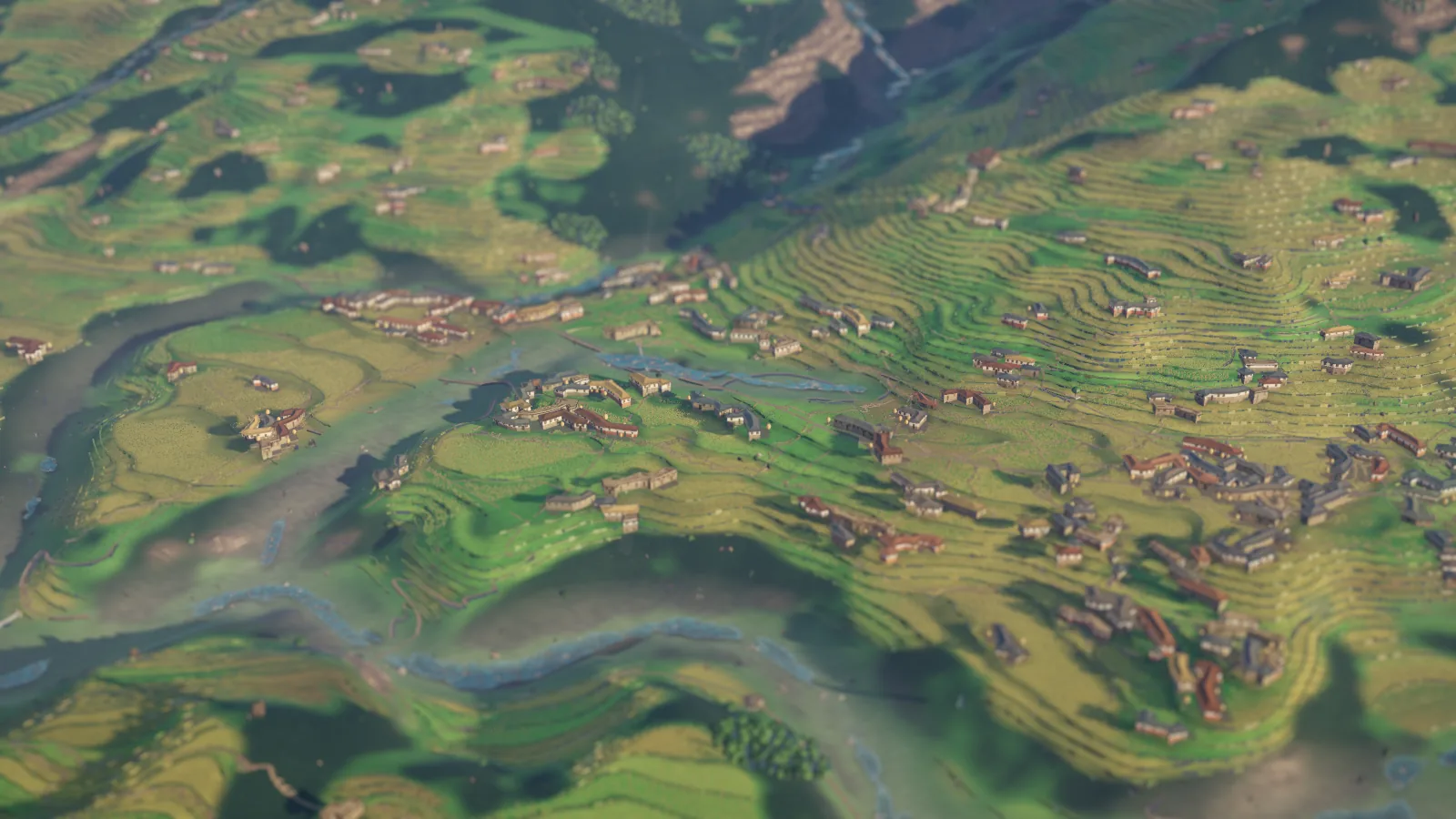
a quiet builder set in the real Nepali Himalaya. every valley is genuine satellite terrain; every village grows the way its people build.
besisahar · the day passing
↓ walk down into the valley
a quiet builder set in the real Nepali Himalaya. every valley is genuine satellite terrain; every village grows the way its people build.
Everywhere you can stand is somewhere you could actually stand.
The terrain is not invented. Each valley is an 8 km window of the real Himalaya — elevation from NASA's high-mountain model, rivers run by a water simulation over the ground the mountains actually shed, roads and waterways where OpenStreetMap says they are. Climb out far enough and the valley becomes a country; cross it, and drop into another window along the Annapurna circuit or anywhere between.
The compass points at true north. The elevation under your camera is in honest metres. Nothing on that card is set dressing.
A village here is not a pile of houses. It is a grammar — who builds attached and who builds apart, where the courtyard opens, how the rows follow the contour — and each one is grounded in documented settlement form, not costume.
Click a terrace and the house that appears belongs to the tradition around it. These are design traditions and useful visual grammars, not boundaries around people; real villages mix, repair, and change.
Very dispersed farmsteads of one to three cells among the family fields, thatch and slate mixed, grain stacks in the yards.
dispersedDense rows along the contour with narrow lanes between; low slate gables over stone.
rowsLoose clusters around paths and terrace courts; whitewashed stone, mostly slate, the odd modern metal roof.
clusterDense attached blocks around near-closed courts; tall red brick, dark carved timber, a roofed temple somewhere in the middle.
courtyardCompact attached mountain rows; two-storey dark stone, pitched slate, deep eaves, few openings.
rowsDispersed slope groups; elongated high-gabled houses of thatch and metal, sited with the river's grain.
dispersedSmall detached groups following the slope; thick full-stone walls, tiny openings, chorten and flags above.
clusterA long trade-route ribbon with occasional courts; flat slate-and-mud roofs, whitewash, firewood stacked at the roof edge.
ribbonTight stepped components merged into shared roof terraces; packed-earth roofs, parapets, flags in the wind.
clusterNear-solid courtyard blocks with narrow residual lanes; tall ochre earthen masses, red trim, chorten.
courtyardU-shaped compounds opening toward the lane; low mud and wattle longhouses under deep thatch eaves.
courtyardA nucleated road ribbon with side-lane compounds; mud and brick, tile and thatch and metal together.
ribbonThe mood is a clock, not a filter.
Dawn, midday, golden, dusk and night are anchors on a ring; every hour between them is interpolated, and everything hangs off it — when the lamps come on in the windows, when the hearths smoke, when the birds hand the valley to the insects, when the villagers head home. At night the Milky Way comes out over the ridge.
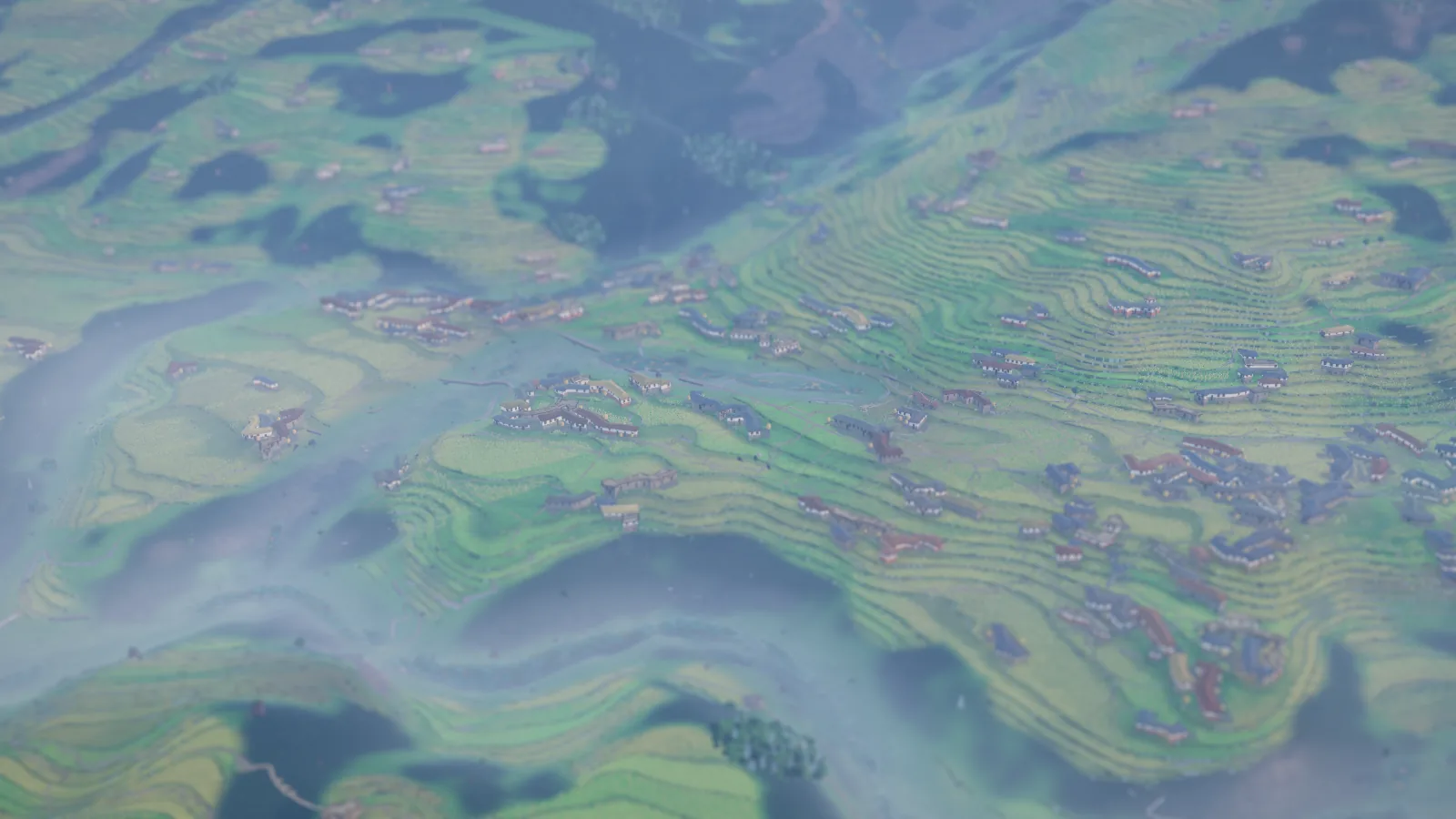
Mist is the exception. Weather sits over any hour, so choosing it holds the clock still.
let the day run, or hold an hour you like — the game never asks you to hurry either way.
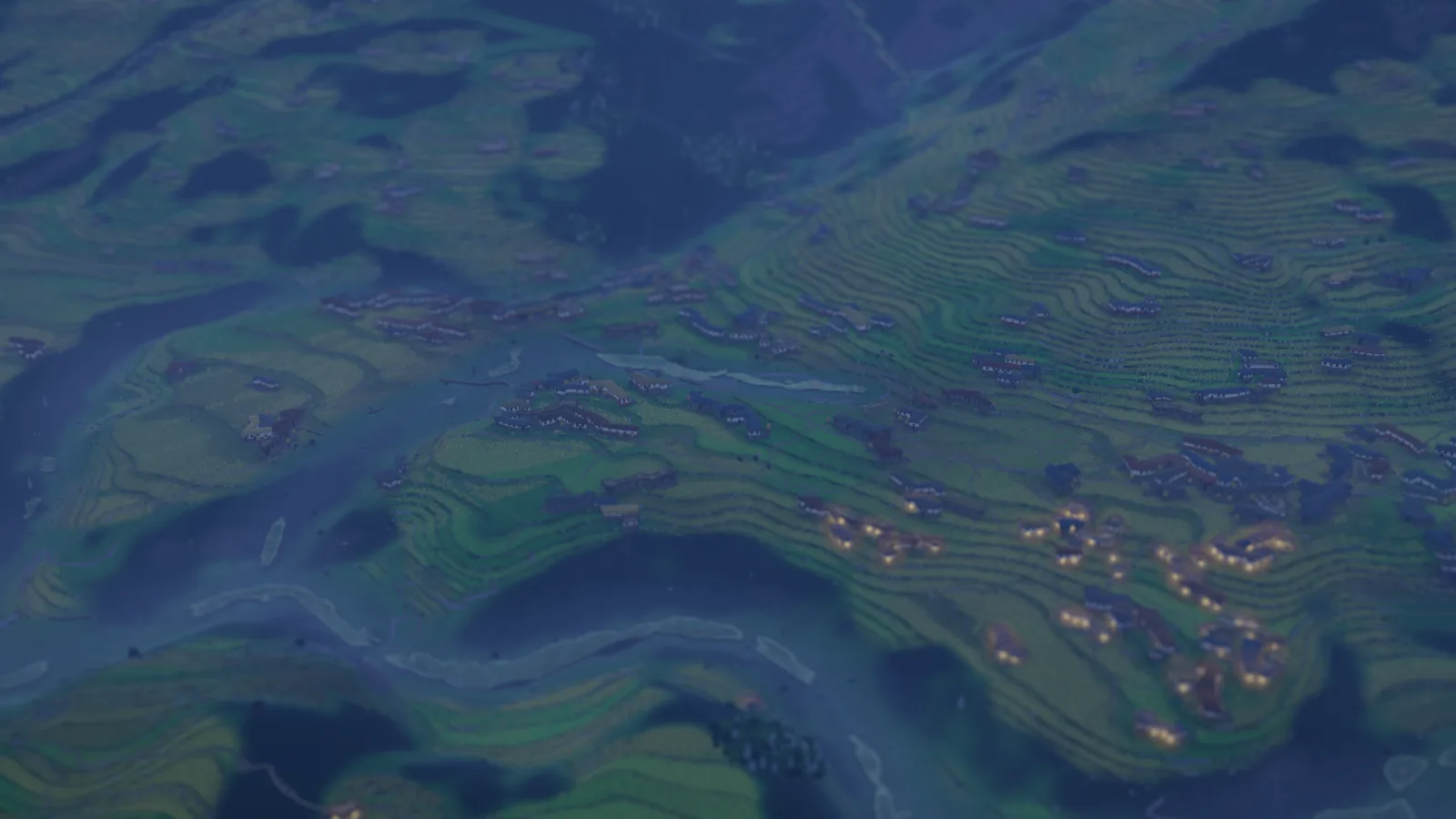
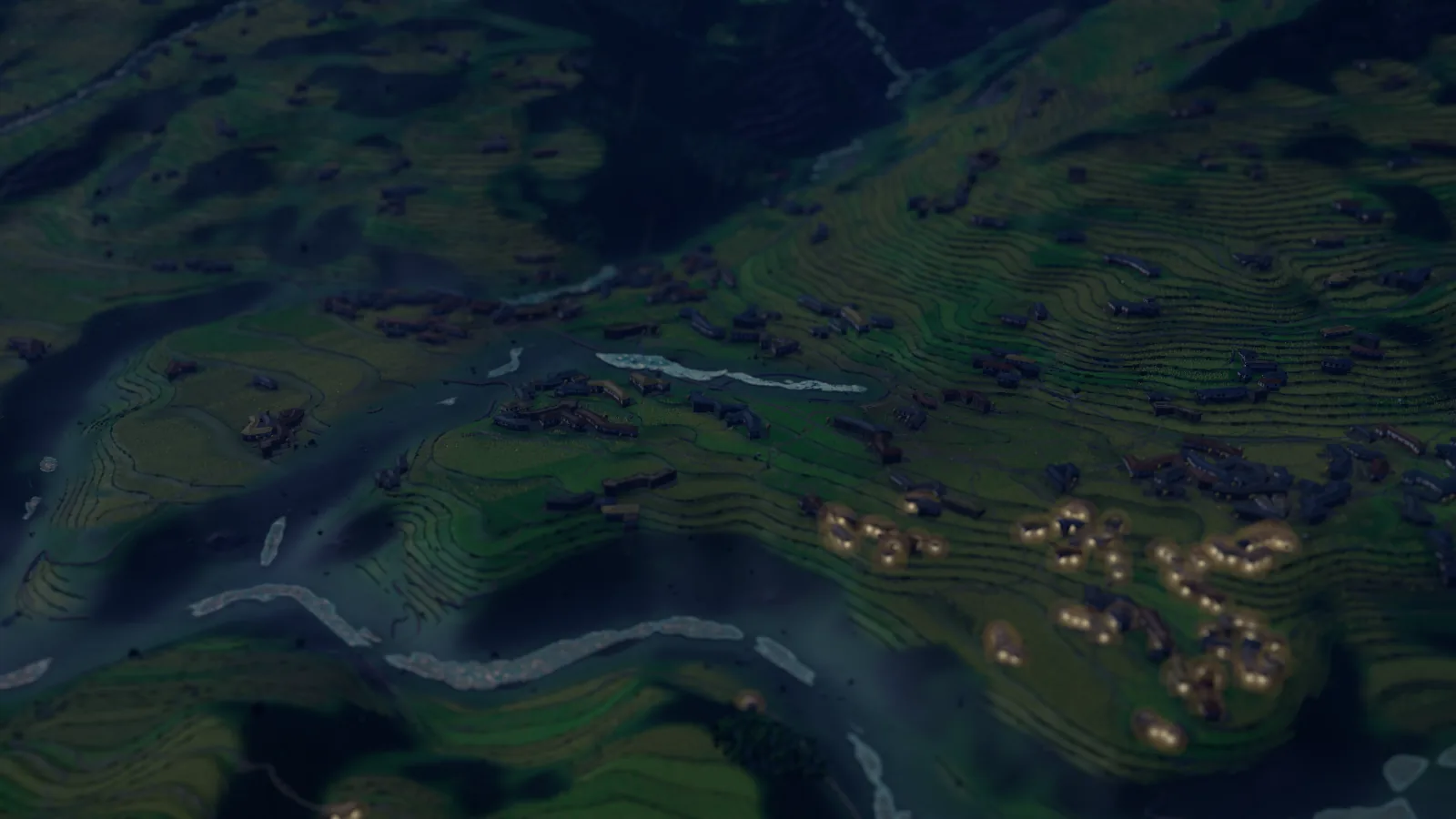
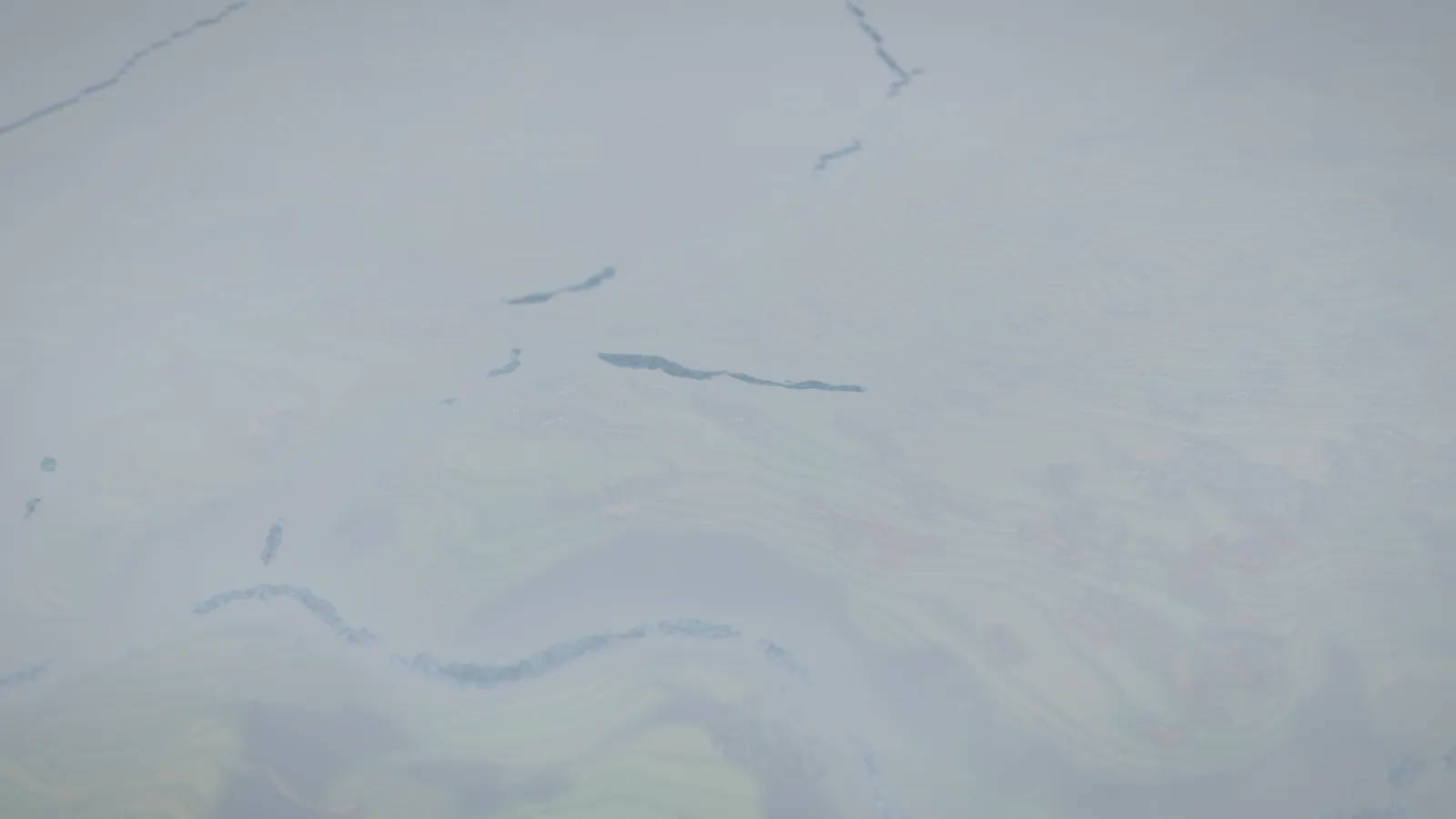
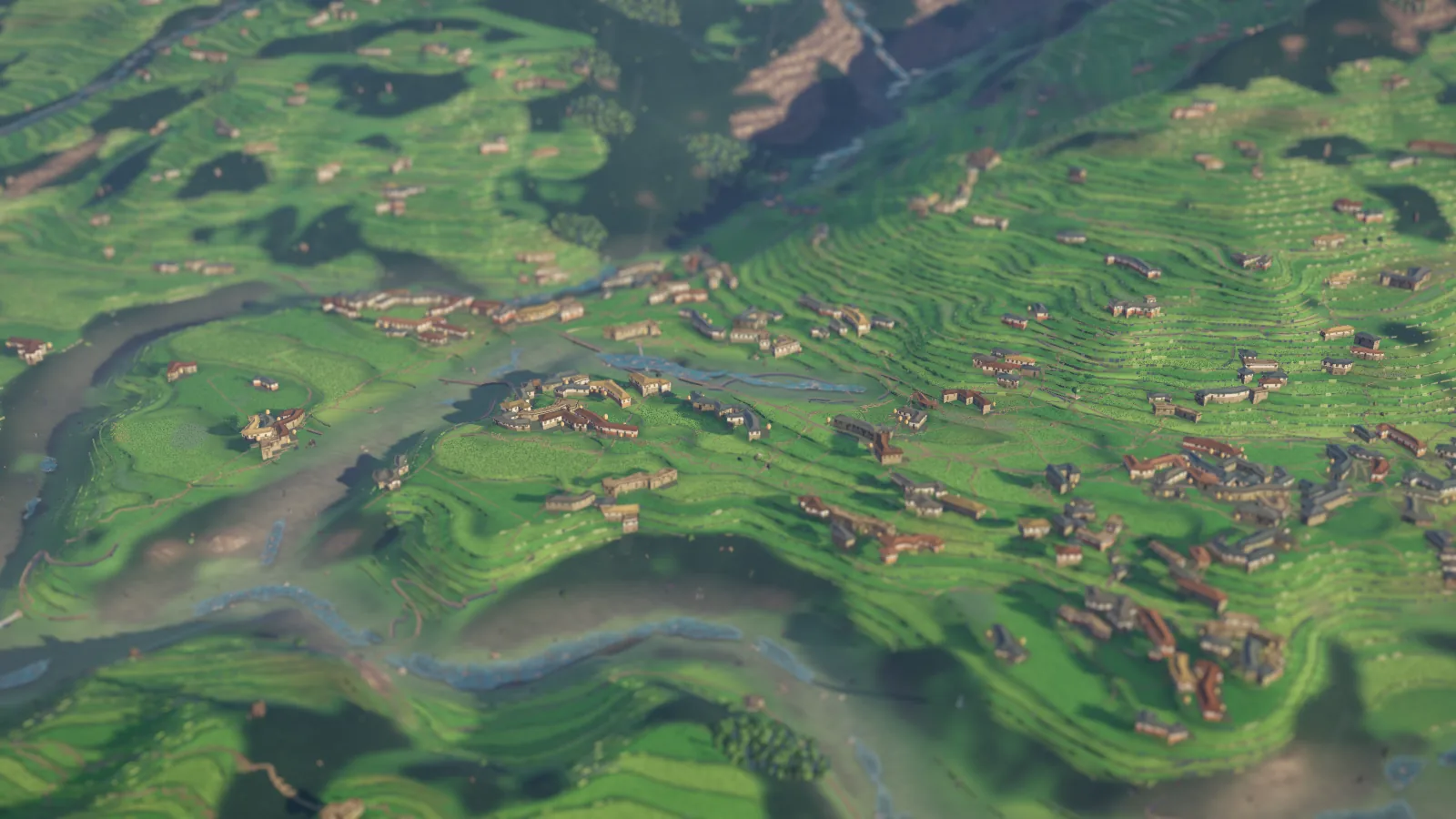
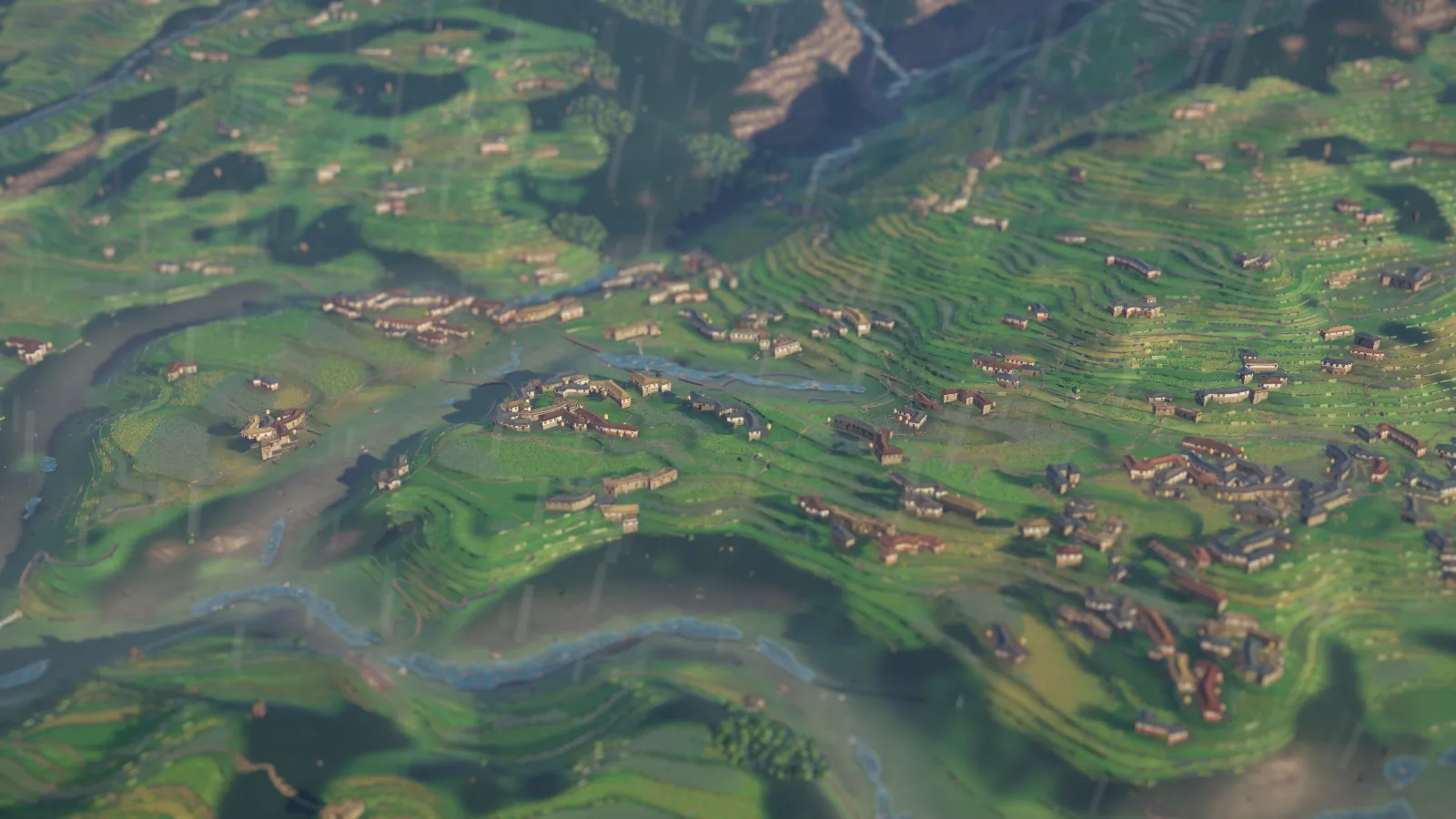
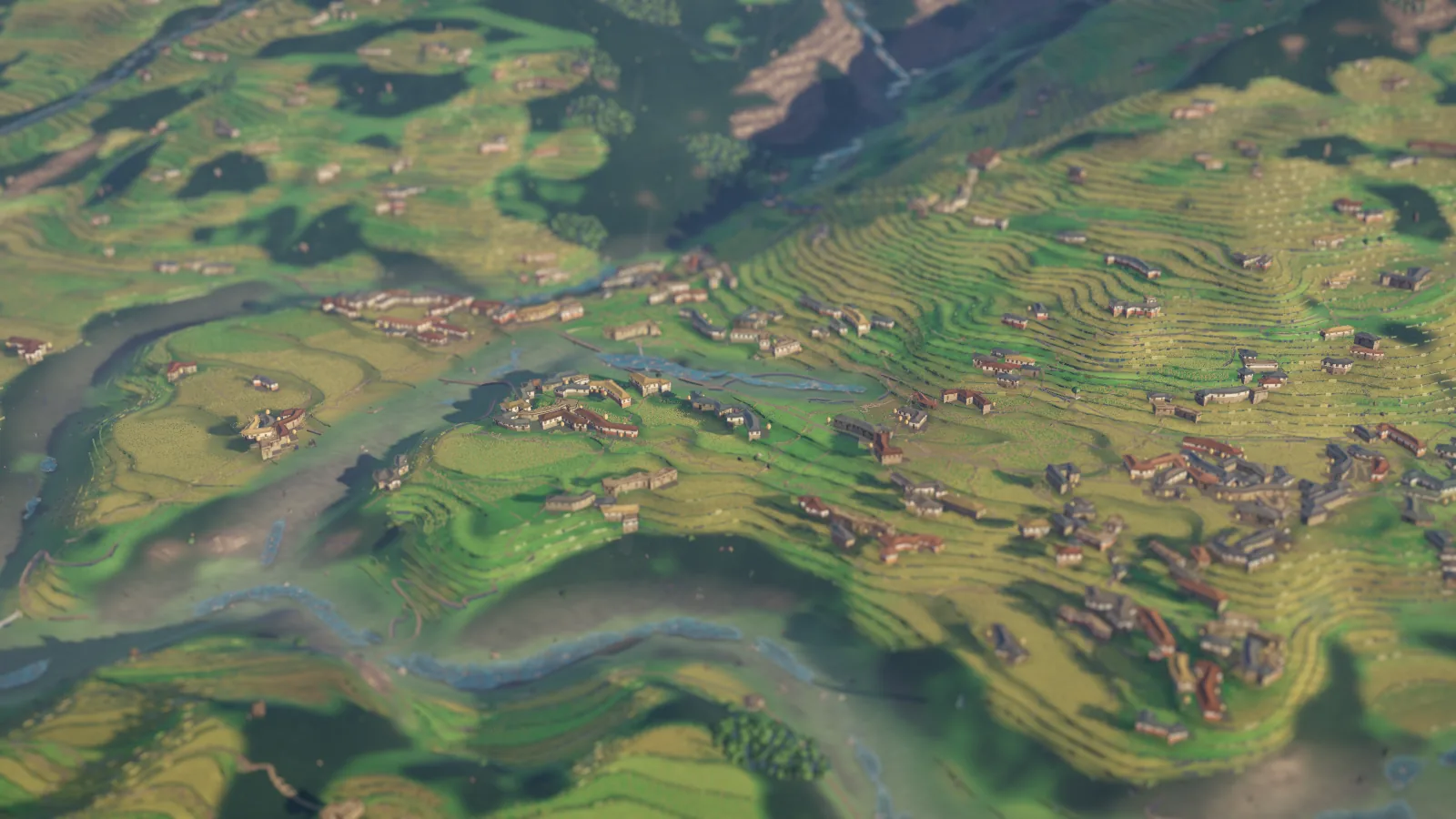
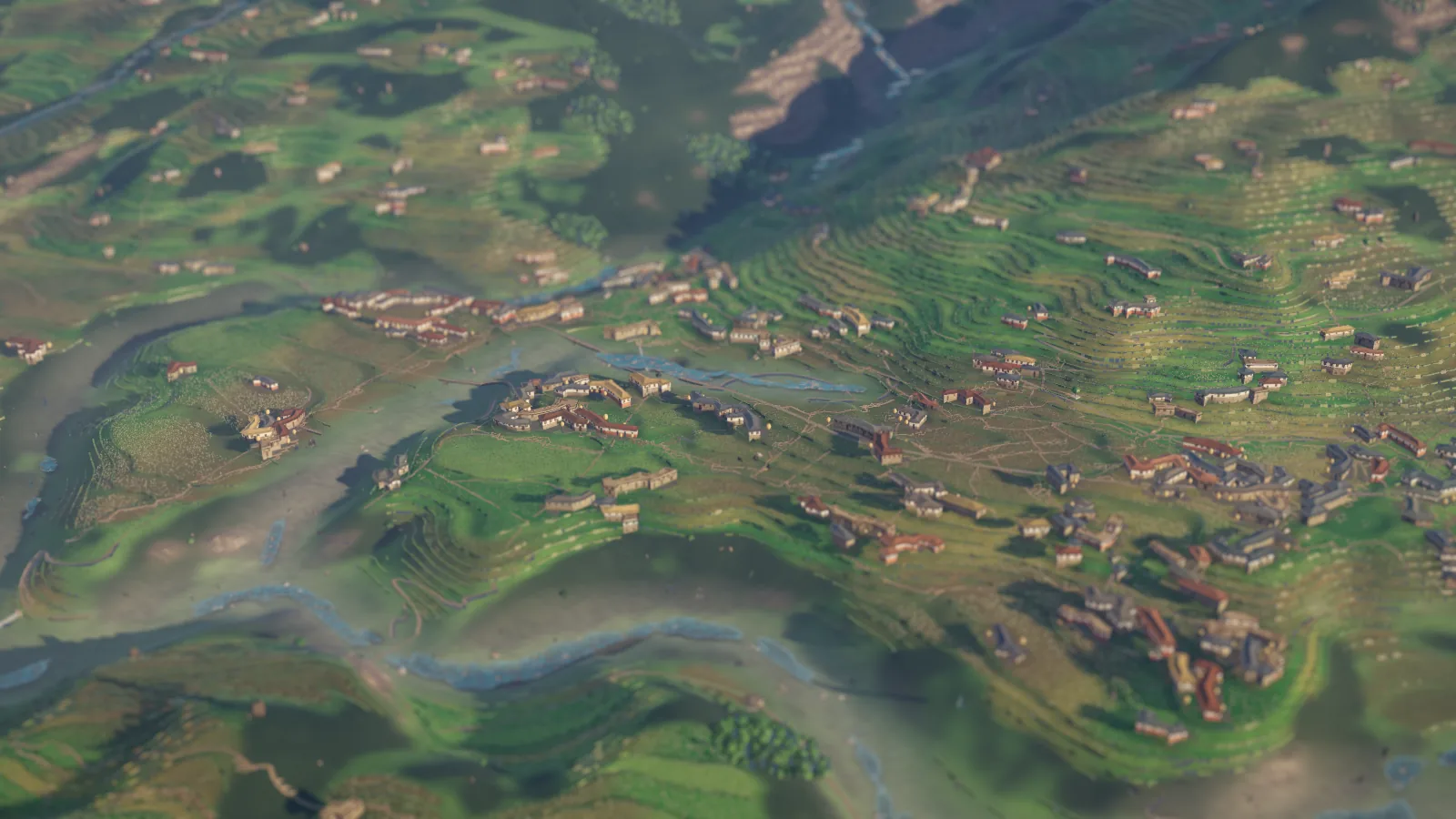
The ground keeps the calendar.
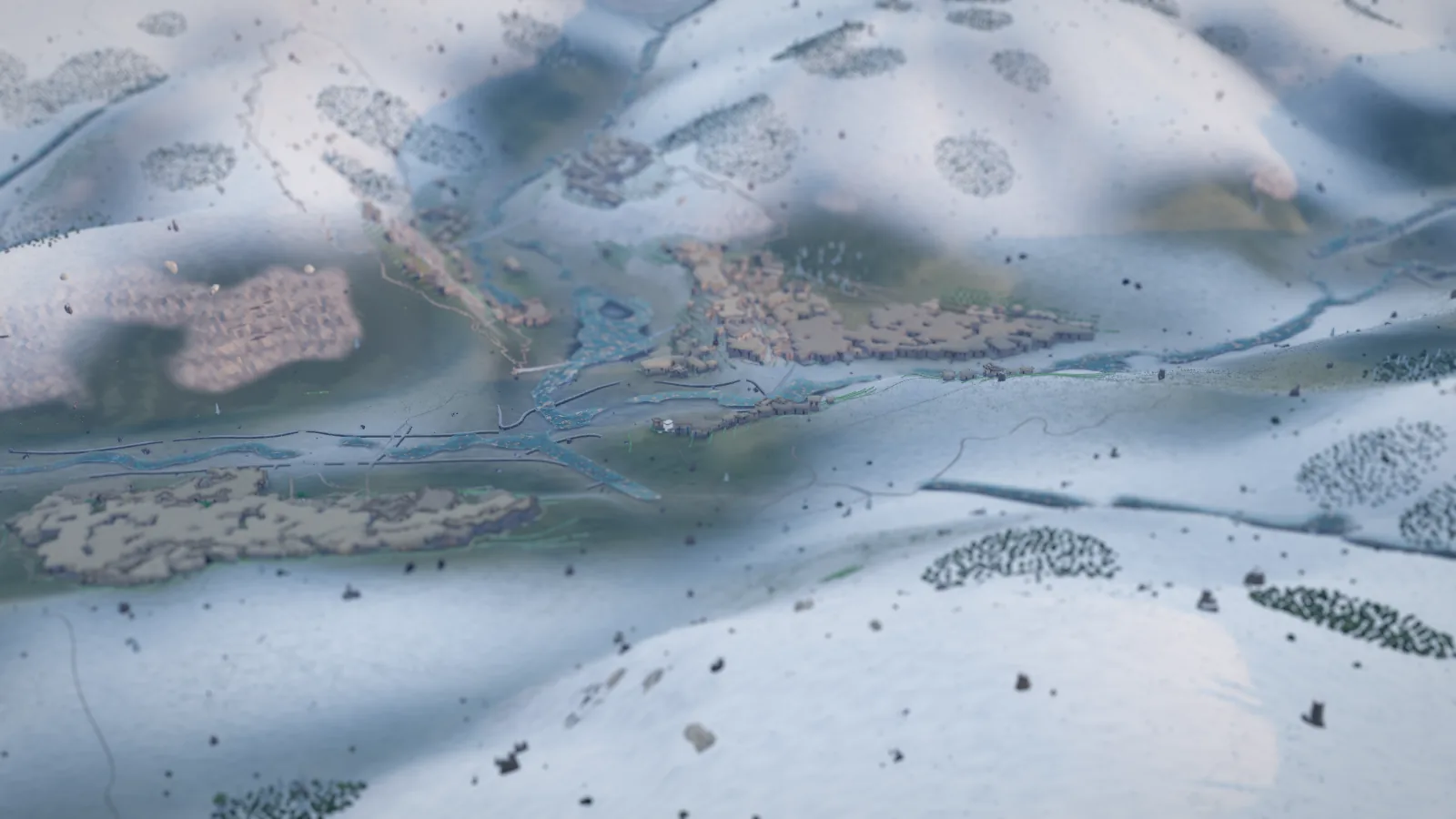
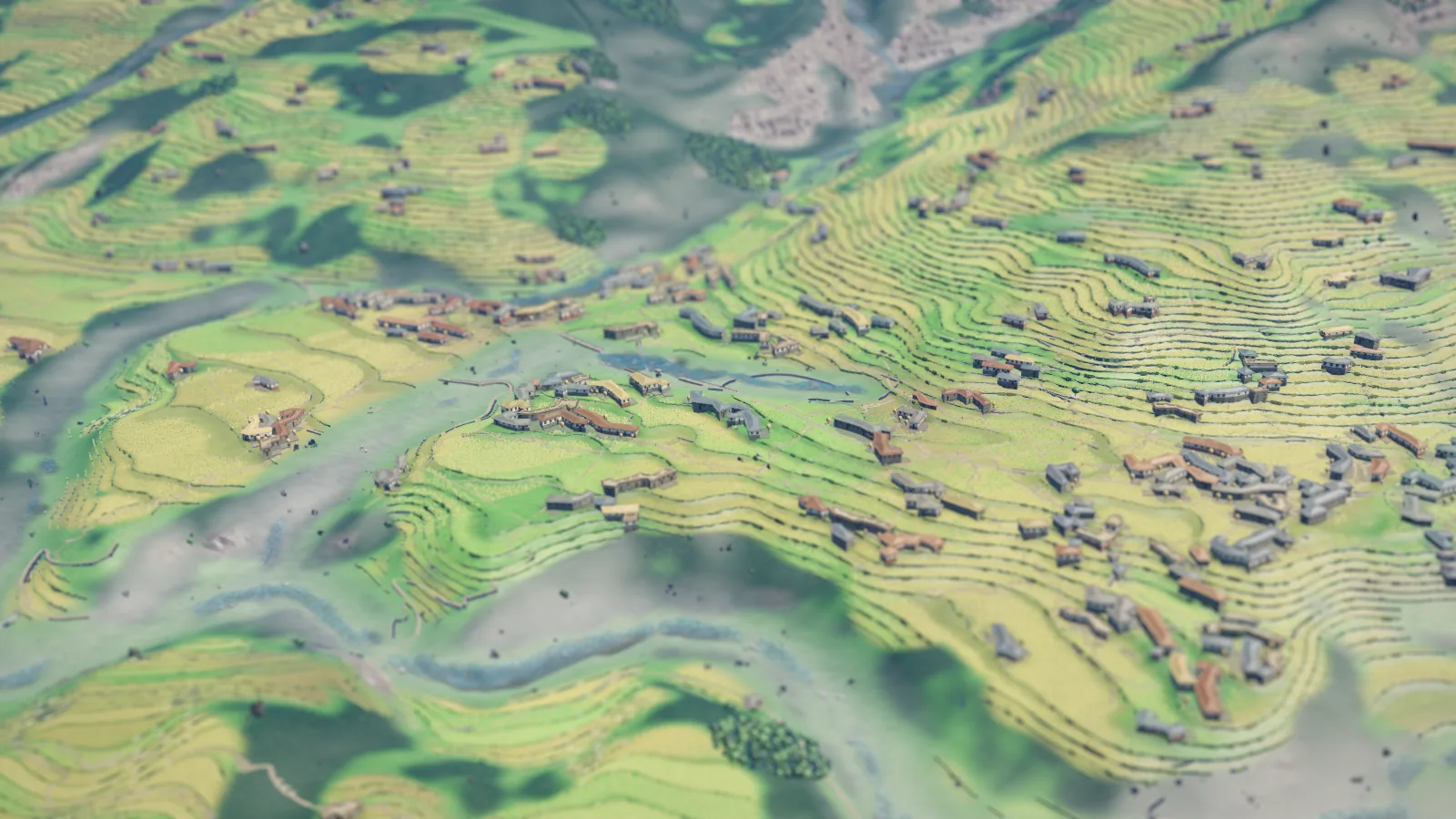
Paddies flood in monsoon and drain by winter. Grassland cures from green to straw. The snow line walks downhill to 2,950 metres and back up. In the rain shadow beyond the crest — Jomsom, Kagbeni, Marpha — the monsoon barely arrives at all, and the valleys stay dust-dry with poplars along the field walls.
Seasons aren't a palette swap; they decide what the fields are doing and where the herds bother to graze.
Nothing here performs for you. It just goes about its day.
Villagers walk a working day that stretches and shrinks with the light, wearing the trails in where they actually walk. Herds graze by altitude — buffalo low, yaks high. Bees orbit every unharvested hive, and honey hunters climb the cliff to bring the comb home in a doko. Smoke stands up from the hearths. At dusk, the windows come on one by one until the village reads as a constellation.
Build a bridge and the far bank joins the day; caravans and neighbours find the crossing on their own.
counted, not estimated — one valley's build log.
There is no fail state, no timer, no score.
This is closer to a diorama you tend than a strategy game. You place a house; the valley absorbs it. You leave for another window; the village keeps its shape and its habits until you come back. Progress is not a number going up — it is a bridge that wasn't there, a trail worn deeper, a feast when the honey comes home.
It is an experiment: a procedural world trying to be influenced by a real one respectfully — the houses, the clusters, the nitty-gritty of how a hillside becomes a home. The mountains are real. The villages are grown. The names belong to the places.
follow the build dev log coming soon